
RIDDOR in Care: What You Must Report, and When
RIDDOR decides which accidents in a care service must be reported to the HSE. This covers what counts, when a resident's fall is reportable, the deadlines, and what your accidents policy needs to say.
By HeroDocs Team
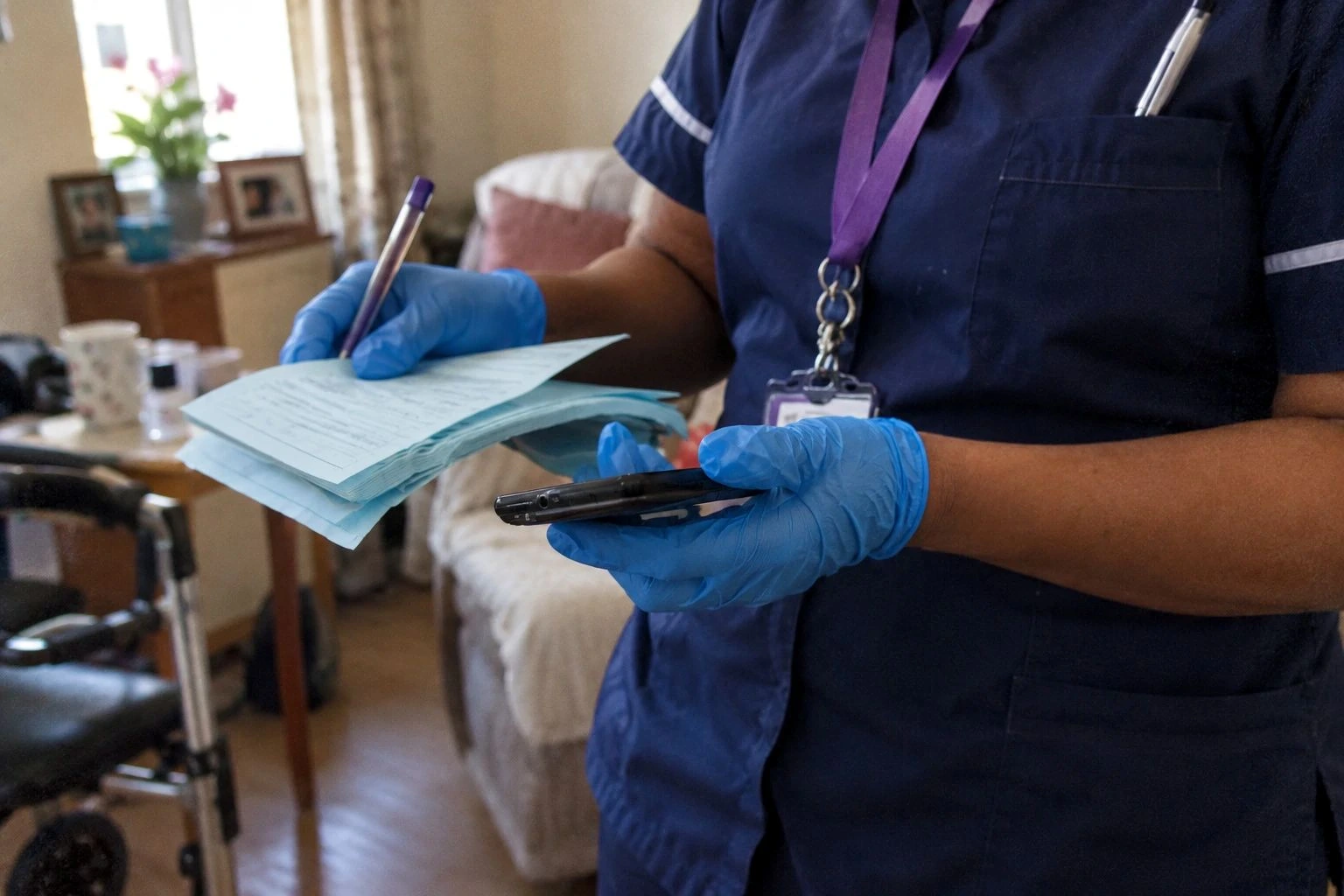
RIDDOR is the law that says which work accidents you must report to the Health and Safety Executive. It is short for the Reporting of Injuries, Diseases and Dangerous Occurrences Regulations 2013. In a care service the rules themselves are not the hard part. The hard part is deciding whether a resident's fall was caused by the work, or simply happened during it.
What follows is what RIDDOR asks for, how the HSE answers the care questions itself, and what your accidents and incidents policy needs to say.
What RIDDOR covers
Four kinds of event are reportable, but only when they "arise out of or in connection with work":
Deaths. Any person, whether or not they were at work.
Injuries to workers. A specified injury, or being unable to do normal duties for more than seven days.
Injuries to people who are not at work. A resident, visitor or service user who is taken straight to hospital for treatment.
Occupational diseases and dangerous occurrences. Diseases a doctor links in writing to the work, plus a fixed list of near misses that did no harm this time but easily could have. The one that catches care homes out is lifting equipment. A hoist that collapses or overturns is reportable even when the person in it is unhurt.
"Arising out of or in connection with work" is the whole test. HSE says this generally means the work activity, the equipment or the environment, including how work was carried out, organised or supervised, contributed in some way to how the accident happened.
The specified injuries
These are reportable when they are work related:
Fractures, other than to fingers, thumbs and toes
Amputations
Any injury likely to lead to permanent loss of sight, or reduction of sight
Any crush injury to the head or torso causing damage to the brain or internal organs
Burns, including scalding, that cover more than 10% of the body, or cause significant damage to the eyes, respiratory system or other vital organs
Any scalping that needs hospital treatment
Loss of consciousness caused by a head injury or asphyxia
Injury from working in an enclosed space that leads to hypothermia, heat-induced illness, or needs resuscitation or more than 24 hours in hospital
When a resident's fall is reportable
Resident falls are where most of the confusion sits. A fall is reportable when it arose out of or in connection with a work activity and caused a specified injury, and the HSE gives these examples of both sides.
Reportable | Not reportable |
|---|---|
A service user falls in the lounge, they have fallen before, and steps you could reasonably have taken were not in place | A service user falls and breaks a leg, was assessed as not needing special supervision or falls equipment, and there were no slips, trips or defects |
A service user falls out of bed and is injured, where the assessment identified the need for bedrails or other measures and they were not in place | A service user falls out of bed where a detailed assessment in the care plan identified that fall protection was not required |
A service user trips over a loose or damaged carpet in the hallway | A service user is found on the floor, nobody saw it, there is no obvious work-related factor, and the care plan assessment said fall protection was not required |
A service user needs hospital treatment after sliding through a sling when hoisted, because the wrong sized sling was used |
Read across those rows and a pattern shows up. Where your own assessment called for something and it was not there, HSE treats the work as having contributed. Where the assessment was done, was reasonable and was followed, it usually did not.
One trap to avoid. That falls wording is HSE's own, and it asks for a specified injury. The wider rule for anyone not at work still stands underneath it: if the work contributed and the person was taken straight to hospital for treatment, it is reportable. Do not wait to decide whether the injury was "specified" before you report a resident who went to A&E.
Two more from the HSE's care examples. A resident scalded by hot bath water and taken to hospital is reportable where the person was vulnerable and adequate precautions were not taken. A resident whose arm is fractured after becoming trapped in a bed rail is reportable.
What is not reportable
Suicide. A service user taking their own life is not treated as an accident, so it is not RIDDOR reportable.
Self-harm. Deliberate self-harm is not an accident either.
Clinical decisions. If someone is hurt by the treatment itself, and a doctor or dentist was carrying it out or supervising it, that sits outside RIDDOR. The exemption covers the clinical act, not everything around it. HSE's own example: a patient seriously injured by a power failure during an operation is still reportable, because the power cut was not part of the procedure.
Infections caught as easily in the community. Influenza in a care assistant is the HSE's own example.
Stress. It does not result from one definable incident, so it is not reportable as occupational ill health.
Violence about a personal matter. One employee injuring another in a dispute about something personal is not reportable.
None of this means nobody will look. The HSE is clear that the general duties of the Health and Safety at Work Act still apply, and an inspector may still investigate.
The deadlines
Event | Deadline |
|---|---|
Death, specified injury, or dangerous occurrence | Notify without delay, and the report must be received within 10 days |
Over-seven-day injury to a worker | Within 15 days of the incident |
Occupational disease | As soon as a doctor tells you in writing |
The duty sits with the "responsible person". For an injured member of staff that is their employer. For a resident or visitor, it is whoever controls the premises where the work was happening.
Report online through the forms at hse.gov.uk/riddor. For a death or a specified injury to a worker you can phone 0345 300 9923 instead. That line is for those two only.
Three points people miss. The seven days exclude the day of the accident, but include weekends and rest days. If a member of staff dies within a year of a specified injury they got at work, you must tell the enforcing authority in writing, even if you never reported the original injury. And failing to report is a criminal offence, while reporting is not an admission of liability.
The records you must keep
Keep a record of every reportable injury, disease or dangerous occurrence for three years. Each record must show:
The date and method of reporting
The date, time and place of the event
Personal details of those involved
The injury
A brief description of what happened
There is a second, smaller threshold. If a member of staff is off, or cannot do their normal duties, for more than three days in a row, you must write it down. You do not report it. Only more than seven days becomes a report.
If you keep an accident book under the Social Security (Claims and Payments) Regulations 1979, that entry counts as the RIDDOR record for injuries. It does not cover diseases. Keep a separate record for those.
RIDDOR is not a CQC notification
These are two separate duties and one does not cover the other. RIDDOR goes to the HSE. CQC notifications go to CQC under the registration regulations, and cover deaths, serious injuries, abuse, police involvement and more. The HSE says other regulators' requirements are separate to, and distinct from, the duty under RIDDOR.
In practice, a single event can trigger both. A resident who suffers a fractured hip after a hoisting error may need a RIDDOR report to the HSE and a statutory notification to CQC. Our guide to CQC statutory notifications covers the CQC side and the forms.
What your accidents and incidents policy needs to say
A policy that only repeats the regulations will not help staff at 3am. Make yours answer six questions:
Who decides. Name the role that judges whether an event is reportable, and the deputy for nights and weekends.
The work-related test. Ask it as a question staff can answer: did the work activity, the equipment, or the way we organised or supervised care contribute to this?
The clock. State the 10 day and 15 day deadlines, and who is responsible for meeting them.
Both regulators. State that RIDDOR and CQC are separate, and that one report does not satisfy the other.
The record. Name where records are kept, the five fields above, and the three year retention.
After the report. Who reviews the event, what changes, and how the learning reaches staff.
If you want the structure that suits every policy, not just this one, see our guide to care home policies and procedures.
Where HeroDocs fits
HeroDocs keeps your accidents and incidents policy in one place, with the owner, the version and the review date on it. When the guidance changes you get an alert naming the policy it affects. You can send the updated policy to your team for sign-off, and the timestamped record is the evidence an inspector asks for.
Sources
HSE, Reporting injuries, diseases and dangerous occurrences in health and social care, information sheet HSIS1 (rev4), published 11/22.
Last checked: 26 September 2026.
---